Industry data reveals this chaos stems from vanity sizing in retail clothing — a tactic where a 34-inch tag often measures 36 physical inches. This psychological trickery explains why you might be a "Medium" here and an "Extra Large" elsewhere, leaving shoppers constantly guessing what a size label is supposed to represent.
Stop blaming your body for these frustrating inconsistencies. The most common mistakes in pants size selection happen when we trust labels over reality. Let the tape measure be your absolute source of truth.
Stop Guessing Your Waist: How to Use a Tape Measure
Grab a flexible tape measure — clothing tags are merely marketing guesses. A brand's "Size 4" might measure anywhere from 26 to 29 inches across the top. Similarly, you might buy a 38-inch waist tag off the rack, only to discover it measures closer to 42 inches when you lay it flat.
The Navel Rule
Your body's natural waist is the narrowest part near your belly button — but your actual trouser waist is simply wherever you prefer the waistband to sit on your torso. Measure there, not at the narrowest point.
Your lower half requires just as much attention. The difference between waist and hip measurements dictates if pants drape smoothly or stretch awkwardly. Always measure your hips at the widest physical point to stop fabric pulling at the fly.
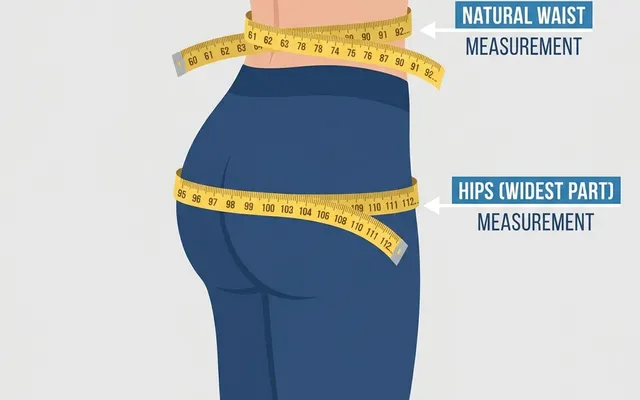
Waist
Just below the navel, where waistband sits. Keep tape snug, not tight. Don't suck in.
Hips
Widest point of hips & buttocks. Prevents pocket flaring & fly pulling when seated.
Inseam
Crotch seam to ankle hem, inside leg. Your second most important number after waist.
The Rise Factor: Why Your Waist Fits but the Crotch Still Pinches
You finally secure a waist size that buttons perfectly, yet sitting down suddenly feels restrictive. This happens because of the "rise" — the physical distance from the crotch seam straight up to the front waistband. Getting this vertical measurement wrong is the main culprit behind a saggy seat or a tight crotch in dress pants.
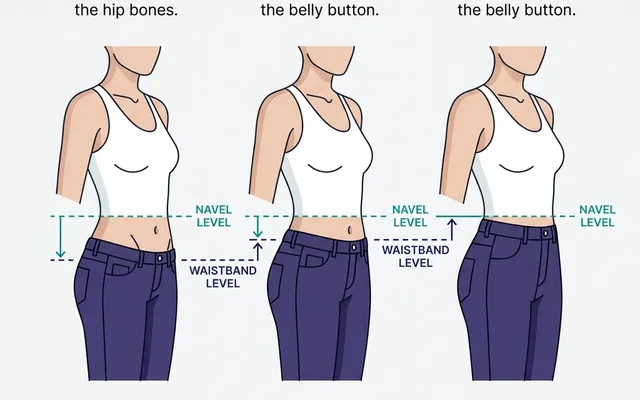
Use your belly button as a reliable landmark when choosing rise:
Low-Rise
Sits on hip bones
Best for slim figures; can create back-waist gap
Mid-Rise
Just below the navel
Most universally forgiving — stops back waist gap
High-Rise
At or above the belly button
Secure hold; great for longer torsos
Mastering the Inseam: Avoid Dragging Hems and High-Waters
Shoppers often focus exclusively on waist size, completely ignoring leg length. Yet the importance of inseam measurement — the internal seam from the lowest crotch point to the ankle — is massive. Ignoring it guarantees a dragging hem that ruins the garment's lifespan.
When extra fabric bunches around your ankles, that is called "stacking". Your daily footwear dictates how to adjust your inseam:
Getting this geometry right prevents you from tripping over your cuffs. See our full inseam measurement guide →
The Spandex Trap: Why 2% Stretch Means You Might Need a Smaller Size
Pants that fit perfectly at 8:00 AM often bag at the knees by noon. This happens when brands mix cotton with synthetic Elastane. Like a rubber band, this stretchy material slowly loses its snap throughout the day.
Contains ~2% Elastane. Apply the "Half-Size Rule" — buy them slightly tight. The fabric fatigues during the day, so starting snug guarantees an ideal afternoon fit.
Rigid fabrics lack built-in elasticity. Size up to account for inevitable denim shrinkage after the first wash — up to 1 full inch on the waist.
The No-Fail Fitting Room Test: Two Moves Before You Checkout
Standing in front of a mirror only tells half the story. Before you buy, look at the front pockets first — if they pull open or flare out, the hips are too tight, regardless of how well the waist fits.
The Sitting Test
Sit down fully. Check for stomach digging into the waistband and rear sagging below the seat. If either happens, try the next rise or a half-size up.
The Two-Finger Rule
Slide two fingers inside the front waistband. They must fit securely without cutting off circulation. Too tight → size up. Too loose → size down or try a belt-friendly cut.
Pocket Flare = Hips Too Tight
If the front pockets gap open or push forward when you stand naturally, the hip circumference is too small — even if the waist number feels right. Always check pockets before the mirror.
Build Your Personal Size Card: Never Return Pants Again
You no longer have to guess your fit. Start by measuring your "Golden Pair" — the pants that already fit you perfectly. Record their exact waist, hip, and inseam inches to create a digital cheat sheet on your phone.
Stop relying on vague tags and always check the website's clothing size chart before buying. Whether shopping for standard sizes, plus sizes, or distinct international fits, your saved inches are your ultimate truth. Use our pants size chart →
Quick International Sizing Tip
Size conversion charts are starting points — your personal measurements never lie. For plus sizes (2X, 3X, 4X) or international fits, always cross-reference your waist/hip inches with the brand's own chart rather than relying on marketing labels.
Q&A: Your Sizing Questions Answered
Why do pants with the same tagged size fit so differently across brands?
Because of vanity sizing. Many brands use size labels as marketing, not measurement — a tag that says 34 inches can physically measure closer to 36. That's why you might be a Medium in one store and an XL in another. Stop trusting tags and start trusting inches — measure yourself (or your best-fitting "golden pair") and compare those numbers to each brand's size chart before you buy.
How do I measure my waist and hips so I stop guessing my size?
Use a flexible tape. Apply the "Navel Rule": your natural waist is the narrowest point near the belly button, but your trouser waist is wherever you prefer the waistband to sit — measure there. Measure hips at the widest point to prevent fly pulling and pocket flaring. Record waist, hip, and inseam from your "golden pair" and save them on your phone, then match those exact inches to each brand's size charts instead of relying on vague labels.
My waistband fits, but the crotch still pinches. What's wrong?
The rise is off. Rise is the vertical distance from the crotch seam to the front waistband, and it determines how pants feel when you bend or sit. Use your belly button as a landmark: low-rise sits on the hip bones, mid-rise rests just below the navel (often best for preventing a back waist gap), and high-rise hits at or above the belly button. The wrong rise causes tightness in the crotch or a saggy seat — even if the waist measurement is correct.
How do I choose the right inseam and avoid dragging hems or high-waters?
Inseam is the inside leg length from the lowest crotch point to the ankle. Start with your true inseam, then adjust for footwear and stacking:
- Flats: subtract 1 inch to keep hems off the floor.
- Sneakers: keep your exact length for a relaxed break.
- Boots: add 1 inch to clear the ankle shaft.
Use an inseam chart as a baseline and tweak for how you want the fabric to fall.
Should I size up or down for stretchy vs. rigid fabrics?
Check the fabric tag. If there's around 2% elastane (stretch), use the "Half-Size Rule" and buy them slightly snug — stretch fatigues during the day, so they'll relax to a perfect fit. For rigid cotton or raw denim, size up to allow for post-wash shrinkage. In the fitting room: look for front pockets that flare (hips too tight), perform the Sitting Test (watch for stomach digging and rear sagging), and use the Two-Finger Rule at the waistband to ensure secure comfort.
Frequently Asked Questions
Everything you need to know about sizing.
All you need is a soft measuring tape (the flexible kind used for sewing). If you don't have one, a piece of string and a ruler work just as well. Measure while wearing thin clothing or underwear.
Yes. Lay your best-fitting pants flat on a surface. Measure the waistband from end to end and double it for your waist measurement. Measure the inseam from the crotch seam to the hem.
The tape should be snug against your body — not tight enough to compress skin, and not loose enough to create slack. You should be able to slip one finger under the tape comfortably.